


Dawn Kett BSc(Hons), MSc, PGDip, PGCert, MBABCP, MBPsS
BABCP Accredited

Private CBT Therapy in St Albans &
Online Across England
CBT for anxiety, stress and overthinking, with mindfulness-based approaches.

Specialist Treatment for Anxiety
Learn What Drives Your Anxiety and How to Overcome It
I want you to leave therapy with a greater understanding of yourself, increased confidence in managing difficult moments and the ability to make choices based on what matters to you rather than what anxiety tells you to avoid.
My aim is not simply to help you feel less anxious in the short term, but to help you build a lasting set of skills and greater confidence in managing anxiety independently.
Anxiety can show up in many different ways — from constant overthinking and worry to panic, intrusive thoughts or feeling overwhelmed at work. CBT can help you understand the patterns keeping anxiety going and develop practical tools to feel more in control.
Does any of this sound familiar?
-
Your mind never seems to switch off
-
You constantly worry about what might go wrong
-
You replay conversations and analyse what you said
-
You struggle to say no or set boundaries
-
You feel anxious despite knowing logically that you're okay
-
Work stress is affecting your evenings and weekends
-
You avoid situations because of anxiety
What Can CBT Help With?
Generalised Anxiety Disorder (GAD)
Constant worry, racing thoughts and finding it difficult to switch off — even when there’s nothing specific to worry about.
Social Anxiety
Feeling anxious around other people, worrying about being judged or embarrassed, or finding it difficult to speak up and be yourself.
Health Anxiety
Persistent worry about your health, physical symptoms or the possibility that something might be seriously wrong — often leading to checking, reassurance-seeking or searching for answers.
Panic Attacks
Sudden waves of intense fear or anxiety, which may include dizziness, breathlessness, a racing heart, feeling overwhelmed or a fear that something terrible is happening.
OCD
Unwanted or intrusive thoughts, images or urges that cause distress, alongside compulsive behaviours or mental rituals that can begin to take over everyday life.
Stress & Overthinking
When your mind feels constantly busy, you’re struggling to switch off, or you find yourself repeatedly going over situations, conversations and decisions.
Work Stress, Imposter Syndrome & People-Pleasing
Ongoing workplace pressure can leave you feeling overwhelmed, exhausted or unable to switch off. You may also struggle with self-doubt, fear of getting things wrong, difficulty setting boundaries or feeling responsible for keeping everyone else happy.
CBT can help you understand what’s driving your anxiety and build practical strategies to respond differently, so you can feel more confident, calm and in control.


What is Cognitive Behavioural Therapy (CBT)?
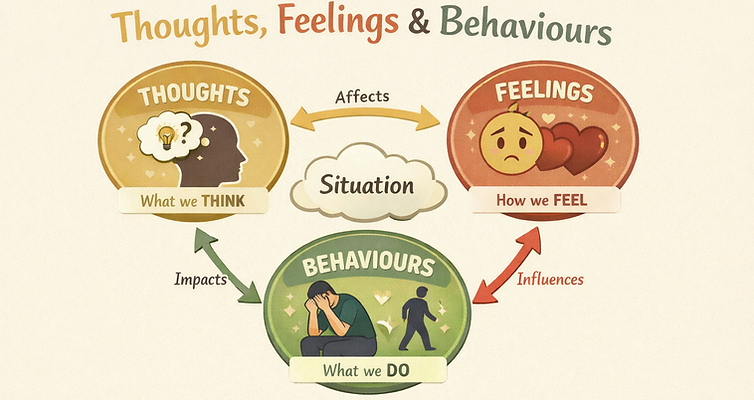
Cognitive Behavioural Therapy (CBT) is based on a powerful principle:
👉 The way we think affects the way we feel.
👉 The way we feel affects the way we act.
And when we change one part of that cycle, everything can begin to shift.
Thanks to research in neuroplasticity, we now know that the brain is not fixed. It is constantly rewiring itself based on repeated thoughts, behaviours and emotional experiences.
How CBT Helps You Break the Anxiety Cycle
Many people try to cope with anxiety by avoiding situations, seeking reassurance or constantly analysing their thoughts. While understandable, these behaviours often strengthen anxiety over time.
CBT helps you recognise the patterns maintaining anxiety and teaches practical strategies to respond differently. Over time, this can reduce anxiety symptoms, increase confidence and help you reconnect with the life you want to live.
If you want a more in-depth description please read my blog post:



Mindfulness techniques help you slow down, stay present in the moment, and reduce anxiety by stepping out of patterns of future worry and past rumination.

These approaches are about making sense of what’s happening in your life, identifying unhelpful patterns and learning healthier, more compassionate ways to respond to challenges.
In our sessions, we’ll work collaboratively to explore what may be keeping you feeling stuck and develop practical coping strategies you can apply both in therapy and in everyday life.
If you’re experiencing anxiety, feeling overwhelmed, struggling with low mood, or simply want a deeper understanding of yourself, CBT offers a structured, supportive way forward. Taking the first step can feel daunting — but it can also be the start of real, positive change.
I’d love to support you on that journey.
Book an initial assessment session today and let’s work together to help you move forward with greater clarity, confidence and self-compassion.


